
Our Team
Ian Jensen, Owner
Ian worked for over 15 years in his family’s business while learning the trade. During this time he worked as a foreman, and he was responsible for project management and quality control. He mastered fine carpentry, mortise and tenon joinery, and the science of building a long lasting healthy home. In 2007, Ian took over ownership of Vermont Country Builders. Since becoming owner, Ian has taken Vermont Country Builders to the next level.
He prides himself on being a hands-on owner, and he oversees his team and projects meticulously. He ensures that each project meets state, city, and town compliance and permitting standards.
He takes pride in his relationship with his clients, team and the local community. Ian loves his work. He is consistently researching current trends to create more advantageous building practices. He is very interested in energy efficiency, and he is inspired by his clients who are also interested in reducing their carbon footprint. Building tight, energy efficient homes is Ian’s specialty. Vermont Country Builders has grown exponentially under Ian’s direction and management.
Ian resides in Manchester, Vermont with his beloved dog, Sadie.

A family owned business with a noteworthy reputation.
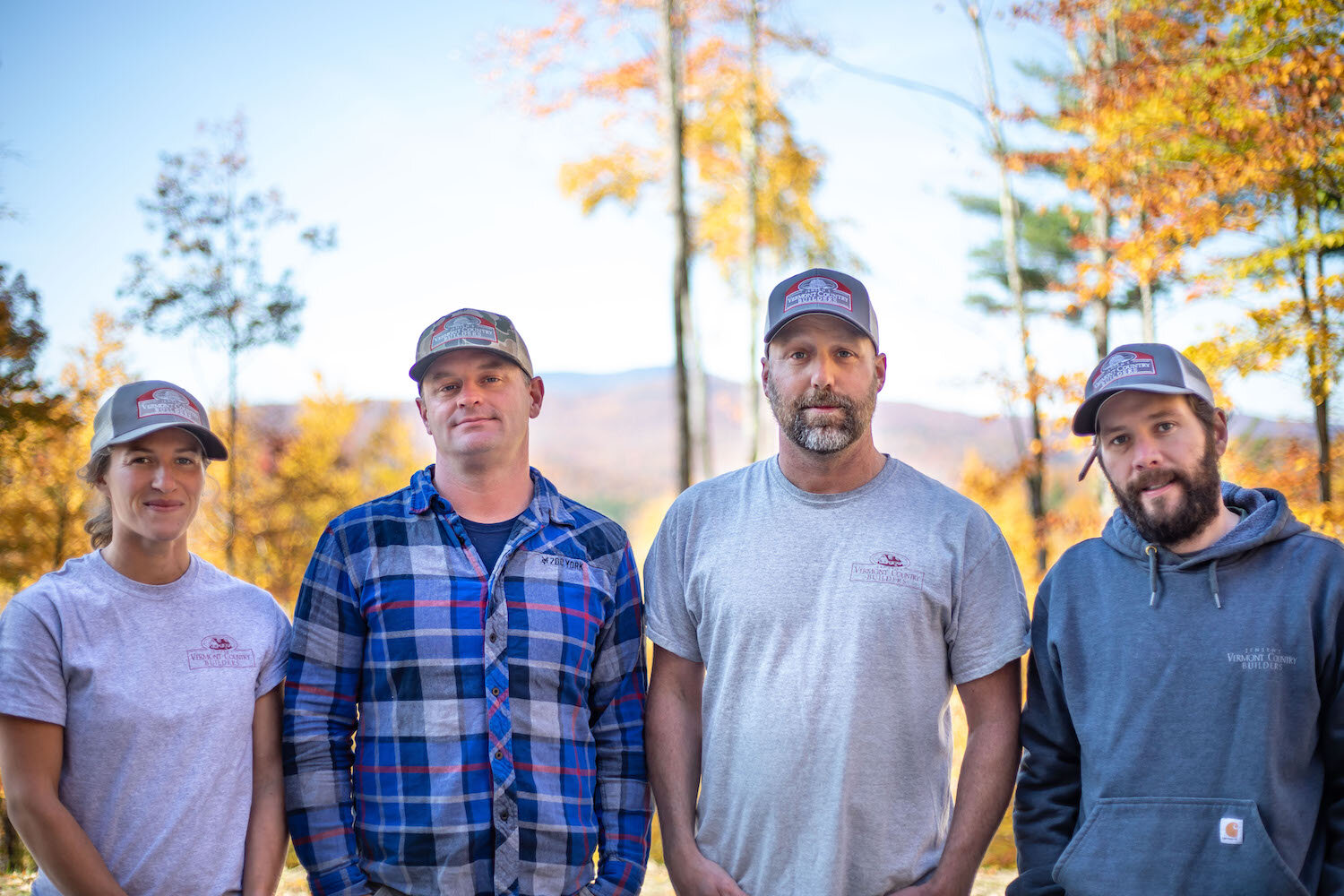
Mara Hearst – Office Manager | Joe Kreig – Craftsman | Ian Jensen – Owner/Craftsman | Buck Lafogg – Foreman/ Craftsman
Since 1986, Vermont Country Builders has perfected the art of building exceptional, custom homes that range in design from farmhouse to modern architectural styles.
Vermont Country Builder’s craftsmanship is exceptional, and it is based on tried and true design, quality, and proportion. The value of our construction is highly detailed, energy efficient, and premium quality.
Building homes in a wide range of architectural designs, Vermont Country Builders specializes in post and beam, timber framed, or stick-built construction. The Vermont countryside can range in design aesthetic from New England farmhouse to contemporary.
Vermont Country Builders is equipped to meet the design expertise of a wide range of architectural styles based on their client’s needs. Throughout the entire construction process, our focus is on high-end craftsmanship with rigorous attention to detail. We source materials through local businesses and artisans.
We are proud to support our local community while delivering exceptional Vermont homes.
Vermont Country Builders has extensive expertise in constructing the following architectural designs in both conventional and Timber frame technics
Farmhouse
Saltbox
Cape Cod
Raised Cape
Colonial
Contemporary
Modern
Barn Homes
Barns: Cross Gable, Wagon House, Grand Barn, Vermont Barn Garage, and Sugarhouse Designs


"VCB worked with us from the time we bought our property all the way through the landscaping of our new house. At every step of the way, Ian was prompt professional and fully engaged in the project.
He walked through woods to layout the building site and driveway; revised the framing plan for our modern home using his timber framing expertise, proposed details to accomplish our design goals, and accommodated every finish and material choice.As an architect, former construction manager and client I would whole hardheartedly recommend Vermont Country Builders."


Vermont Country Builders is comprised of a team of highly skilled framers, finish carpenters, and craftsman.
We ensure that our clients are receiving the personalized attention that they deserve as we embark on an exciting building journey together. Our team is thoughtful, communicative, trustworthy, and efficient. We take pride in the cohesive nature of our team.
We are proud of not only our relationship with our clients and community, but of our family-centric team.Vermont Country Builders has a 5 star rating on Erik and Nancy’s Residence. All of Vermont Country Builders projects meet or exceed energy guidelines.
Our goal is to create aesthetically pleasing,
well-constructed, and energy efficient homes.
What they are:
Approachable
Attentive
Diligent
Experienced
Highly Skilled
Great Communicators
Team Players
What they offer:
Complimentary estimate
Energy efficiency advisement
References upon request
Transparent Pricing
Permit Submissions
Thoughtful Planning/ Siting
Well Designed/Engineered Plans
Dependable follow through
"When The Vermont Country Store wanted to build a traditional structure next to its Rockingham store on Rt. 103 for use as a sales barn, it knew who to call.
Last week, Jensen's Vermont Country Builders of Londonderry began constructing one of its specialty post and beam barn structures on the west side of the store."